Best Nontoxic Cutting Boards
When you care about clean eating, organic ingredients, and a nontoxic kitchen — like we are at Mimi’s Organic Eats — your cutting board matters almost as much as your ingredients. The material you chop and slice on can affect food safety, longevity of your knife edges, and even what ends up in your meals!
Below is a roundup of the most common nontoxic cutting board materials — their pros, cons, and how to choose wisely if you’re trying to keep your kitchen nontoxic and functional. If you’re looking for more nontoxic review posts, check out The Best Nontoxic Pans Rated, Best Nontoxic Cake Pans Rated, The Best Nontoxic Pie Pans to Bake With, Best Nontoxic Dutch Oven Under $100 — Plus Great Picks Up to $150, and Best Nontoxic Loaf Pans for Baking.
In This Baking Guide
- Best nontoxic cutting boards
- Pros and cons of different types of cutting boards
- Top picks for nontoxic cutting boards
Summarize & Save This Content On
Why Nontoxic Cutting Boards Matter
- Some cutting boards — especially low-quality plastics — may shed microplastics or chemical additives into food as they wear down.
- Others harbor bacteria if they’re deeply scratched or not cleaned properly, especially with porous materials.
- When choosing a cutting board, you want a balance: food-safety, knife-friendliness, durability, and longevity — ideally with minimal risk of leaching or contamination.
Cutting Board Types — Pros & Cons
I’m sharing my favorite nontoxic cutting board types and the pros and cons of each. This way, you can be informed and choose which type of nontoxic cutting board fits your kitchen needs and lifestyle.
Wood (Acacia, Birch, Maple, Walnut, Cherry)
Wood is one of my personal favorite choices for cutting boards. It’s natural, nontoxic, and has no added coatings on it. They are also sturdy, thick, and they are nice to cut on. This is usually what I’m choosing when I grab a cutting board!
Pros
- Solid wood boards are often considered the most natural option — no synthetic coatings, no plastics.
- When properly cleaned and maintained, many hardwoods (maple, walnut, acacia, bamboo, etc.) have natural antimicrobial properties.
- Gentle on knife edges, so your knives stay sharp longer than with hard surfaces like glass or metal.
Cons
- Wood is porous, which means moisture and food particles can penetrate. If not dried properly, this can harbor bacteria over time.
- Many wood boards are glued together from smaller pieces, which can involve adhesives that could contain chemicals. For “cleanest” wood boards, look for a single solid slab of wood with no added fillers or glues or specific wood cutting boards labeled nontoxic.
- Requires care: hand-wash (most wood boards should never go in the dishwasher), dry quickly, and periodically condition with food-safe cutting board oil to maintain integrity and prevent cracking. Don’t use cooking oils, be sure to use a cutting board specific oil.
How to Oil a Wood Cutting Board
- Wash and dry the board completely.
- Add cutting board oil onto the board and rub it (with the grain).
- Let it soak overnight. You can buff out excess oil the following day.
- Oil your board monthly or whenever it looks dry.
My Top Picks:
Caraway Cutting Board
- Price: $125 for 17×12-inches (they also have small sizes starting at $50 and have set options to save money), use code MIMIBAKES10 for 10% off Caraway
- Wood Type: Birch wood
- Free of BPA, BPS, Plastics, Phthalates, Melamine
- FSC-certified birch wood
- Without forever chemicals
- Each board is naturally antimicrobial
- Gentle on knives
- Built to last
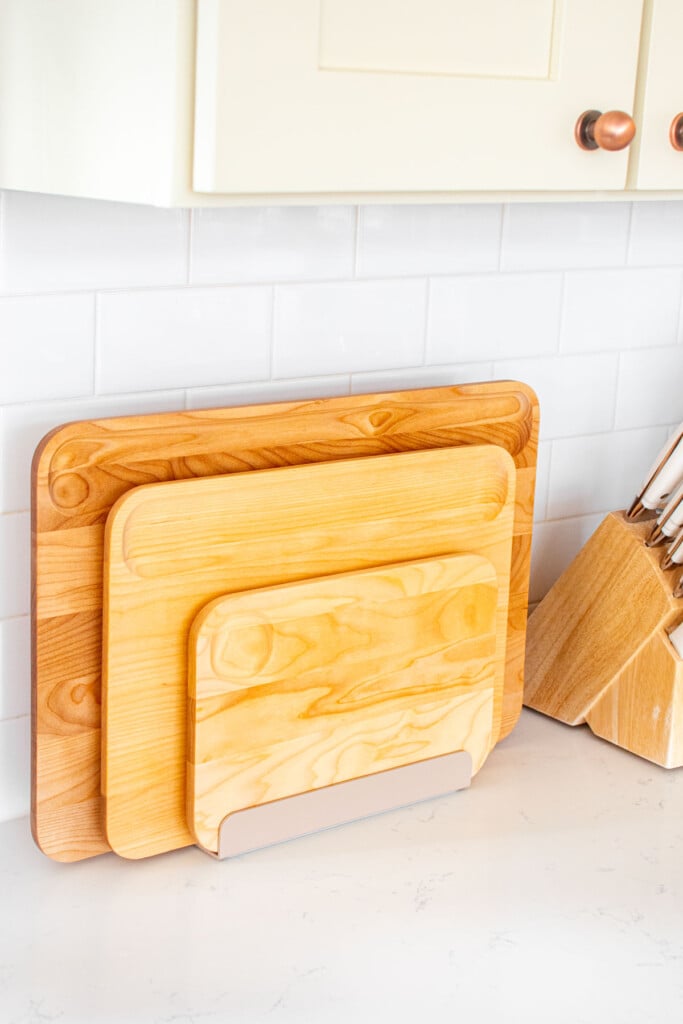
This Caraway Cutting Board Set is my top pick for every day use. There’s multiple sizes which make it easy to use for basically everything. Plus, they’re easy to clean. I love this for chopping veggies, slicing shortbread cookies like Sourdough Chocolate Shortbread Cookies and Peanut Butter Oatmeal Sandwich Cookies With Sourdough Discard, and especially for slicing and serving Quick Homemade Flatbread Pizza Dough (No Yeast).

Viking Reversible Acacia Wood Cutting Board
- Price: $129.99 for 14×20-inch board
- Wood: Acacia wood
- Free of BPA, BPS, Plastics, Phthalates, Melamine
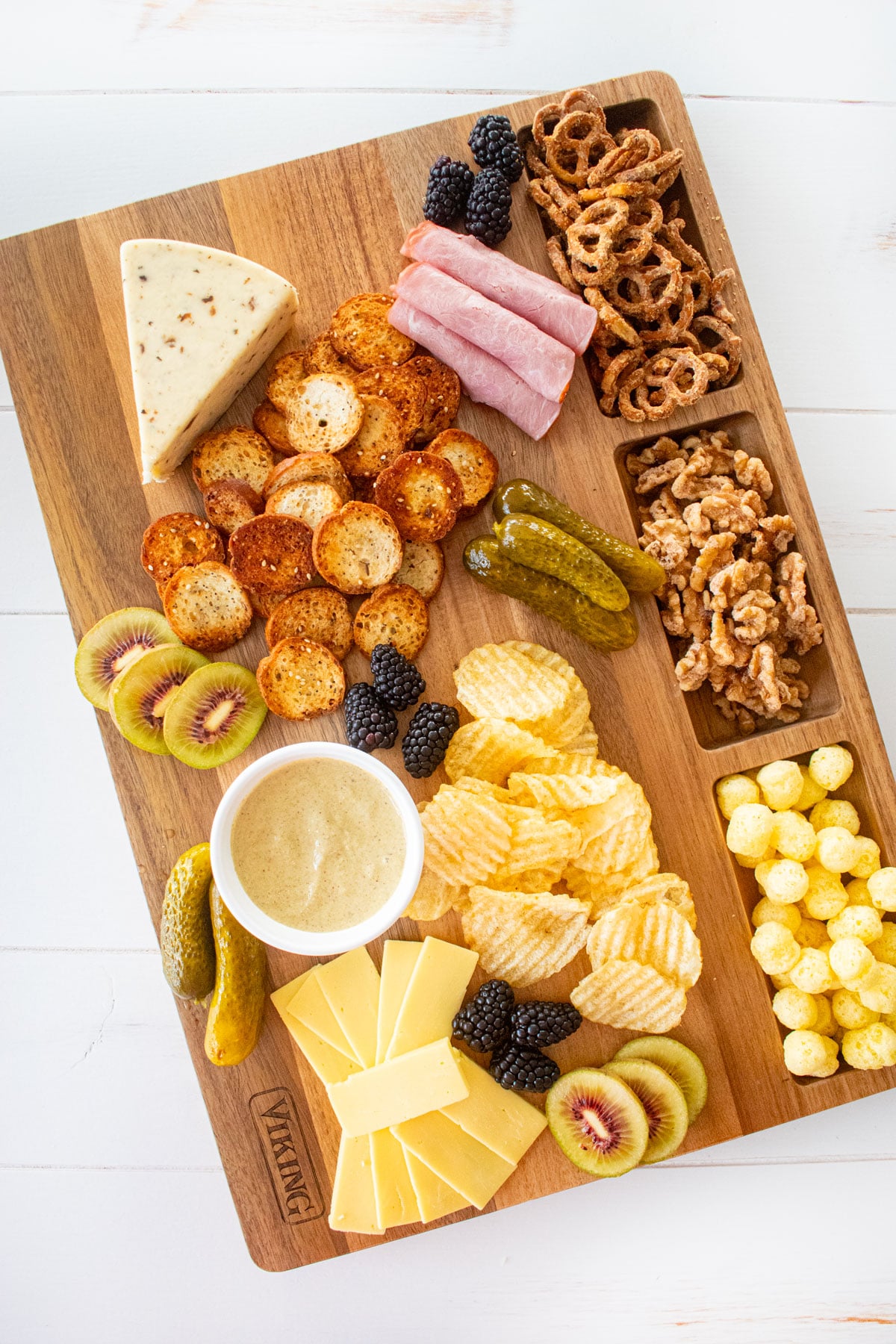
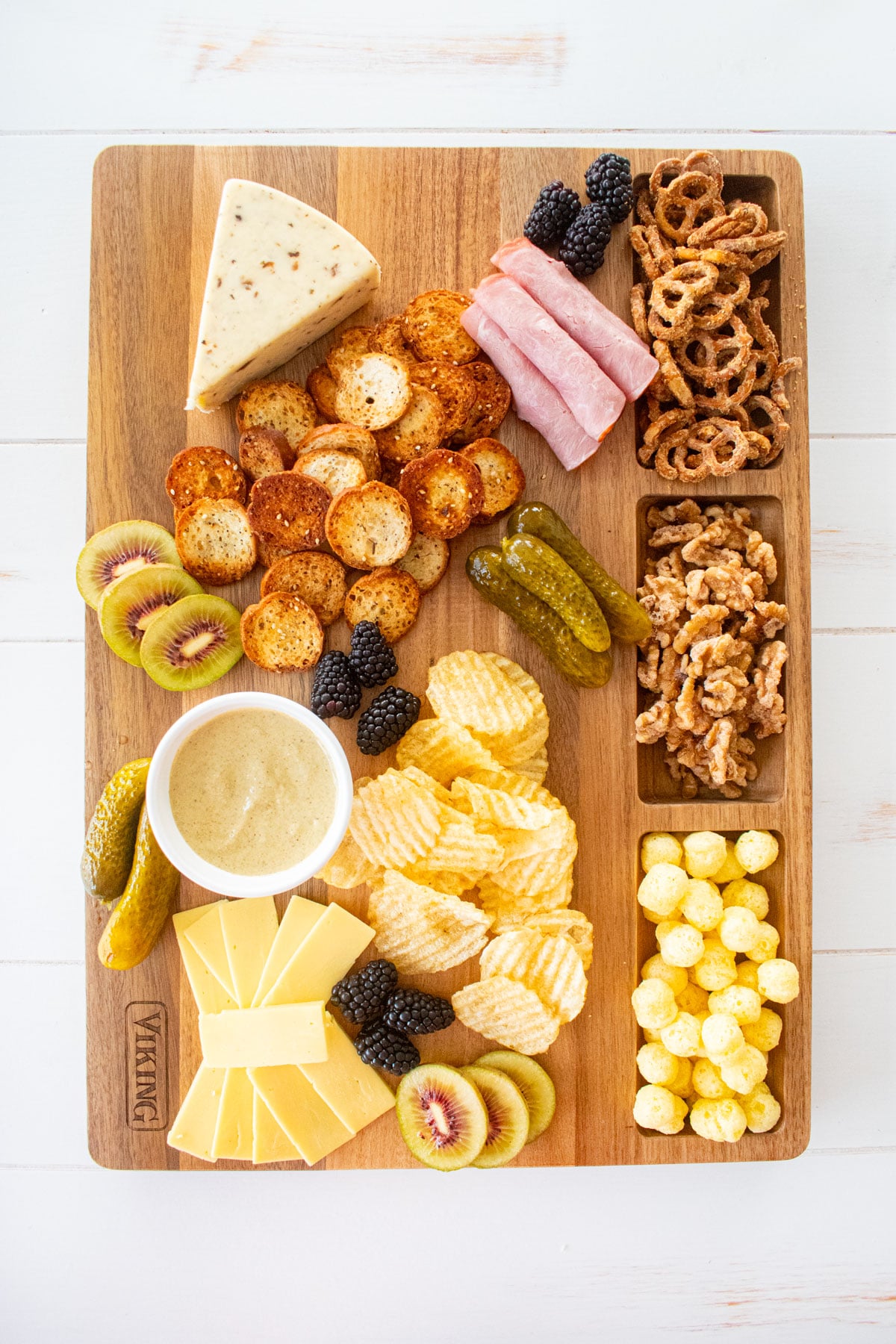
This is my top pick for entertaining as it’s huge! This acacia wood board is perfect for charcuterie for a party. It has small indents on one side that make it ideal for adding in grapes, nuts, or pretzels. The other side has grooves to catch juices. Plus it’s absolutely gorgeous!
I love this for charcuterie boards for parties, like Valentine’s Day Charcuterie Board. You can also make a chocolate dessert board with simple chocolate treats like Strawberry Chocolate Bars, Chocolate Covered Raisin Clusters, Chocolate Cream Drops, Puppy Chow Candy Clusters, and Homemade Chocolate Marshmallows Without Eggs.
Bamboo
Often lumped in with wood, but technically bamboo is a grass — these cutting boards offer a slightly different set of pros/cons than wood.
Pros
- Renewable, fast-growing, and more eco-friendly than slow-growing hardwoods.
- Naturally harder than many woods, so durable and resistant to warping or cracking with proper care.
Cons
- Because bamboo is harder than wood, it can be tougher on knives — so you might find yourself sharpening your knives more often.
- As with wood — maintenance required; avoid soaking or dishwasher use for longevity.
- Hand wash and dry immediately.
Top Picks
Freshware Bamboo Cutting Board Set
- Price: $13.99 for a set of 3
- Knife Friendly: Earth-friendly bamboo fiber surface is better for your knives
- Made from 100% sustainable bamboo
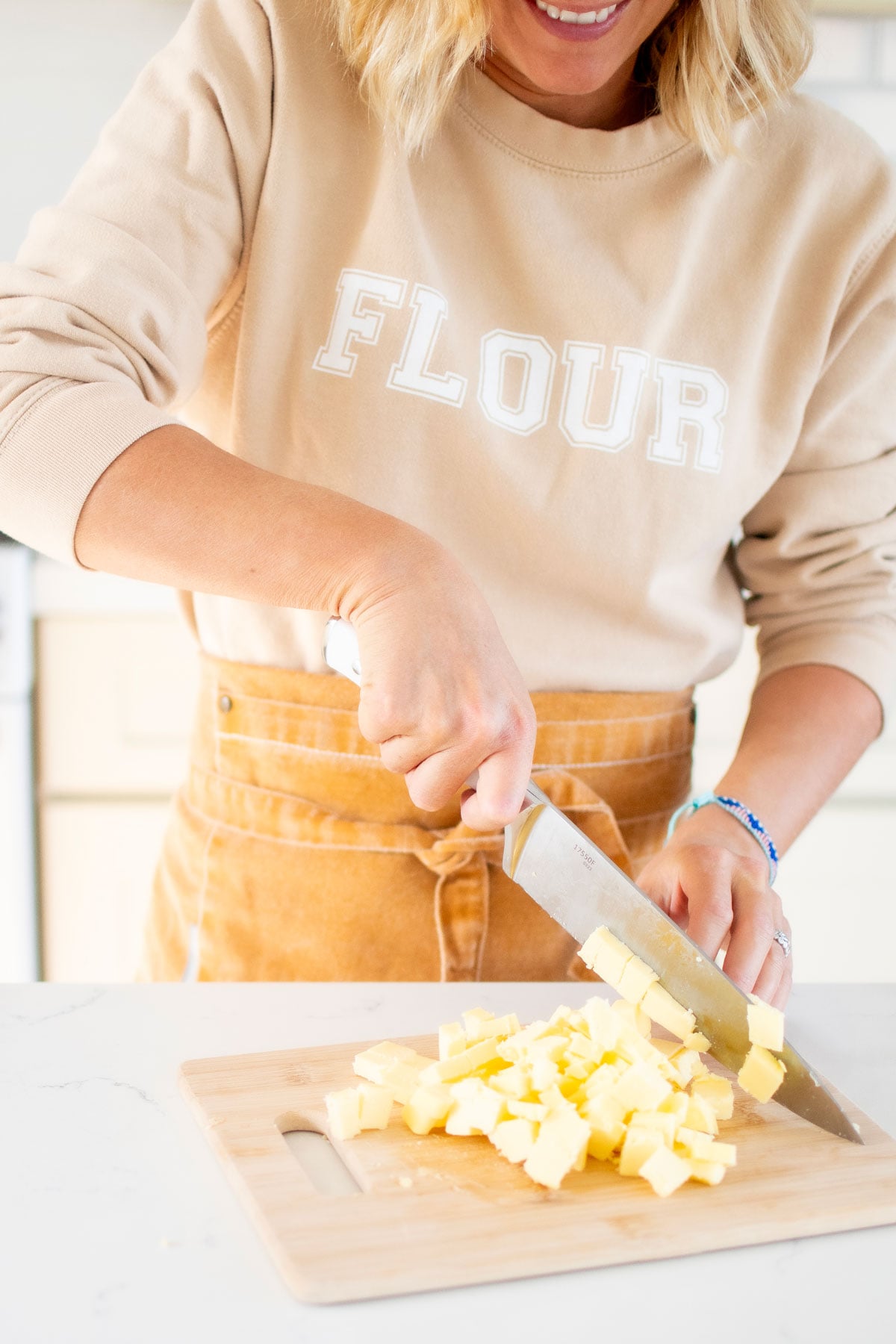
I use bamboo all the time, especially for chopping butter for Blueberry Slab Pie Without Eggs, Peach Crumble Pie, or Brown Sugar Honey Apple Pie. I also use this often to chop veggies for John John's meals like Turkey Dog Food Recipe and Chicken Dinner Recipe for Dogs.
Glass or Tempered Glass
Glass cutting boards are nontoxic, because they are just glass. But, I don’t love cutting on glass! These are better used for serving snacks on, in my opinion.
Pros
- Completely non-porous — meaning no absorption of juices, bacteria, or odors. Plus, it’s very easy to clean and santitize thoroughly. Great for cutting raw meat because it can be sanitized.
- Dishwasher-safe, stain-resistant.
- Often double as serving boards or heat-resistant trivets too. So, these can be dual purpose!
- I actually like using this more as a serving board for charcuterie than I do for cutting.
Cons
- Extremely hard on knife edges — glass dulls and damages blades quickly.
- Risk of chipping, cracking, or even shattering — a safety hazard especially with heavy chopping or wet surfaces.
- Typically not ideal for heavy chopping tasks — better suited for light slicing, fruit, bread, or as a serving surface. So, might be better used for snacking versus cooking.
- Personally, I think these feel weird to cut on! It’s not my favorite for using.
Top Picks
Tempered Glass with Silicone Grip
- Price: $26.99
- 2 board set, 12×16-inches and 12×8-inches
- Non-Toxic Glass Cutting Board
- Engineered to resist scratches, repel food residue, eliminate odors, and prevent microplastic release
- Dishwasher safe
BPA Free Plastic
While I understand the ease of plastic cutting boards, if you’re going to go with plastic, you must be choosing a BPA free plastic. But even this option, after much use you’ll see small scratches and marks so you will need to replace this kind of cutting board more often.
Plastic is a good option if you’re using a cutting board to cut raw meat. This is because it’s non porous and it can easily be sanitized in the dishwasher if needed.
Pros
- Usually plastic cutting boards are the most budget friendly.
- Easy to store, wash and clean. Most plastic cutting boards are dishwasher safe, making them easy to clean without fuss.
- No oils or special care needed beyond regular washing/sanitizing.
- Don’t need to dry immediately.
Cons
- While plastic can be the most budget friendly, it will be one you’ll need to replace most often. So that’s a trade off.
- As soon as you notice scratches or indents, it can be time to replace. These tiny cuts can trap food particles and bacteria, making it hard to clean well. This can lead to potential cross-contamination, as these grooves become breeding grounds for germs and bacteria.
- Plastic boards can be tough on knives, which can lead to having to sharpen more often.
- If your plastic board doesn’t have any sort of grip, this can be dangerous when chopping as the board can slide around. I have experienced this first hand and even cut myself while chopping on a board like this! (It went in the trash immediately afterwards haha). Make sure to buy a plastic cutting board with rubber grips.
Top Picks
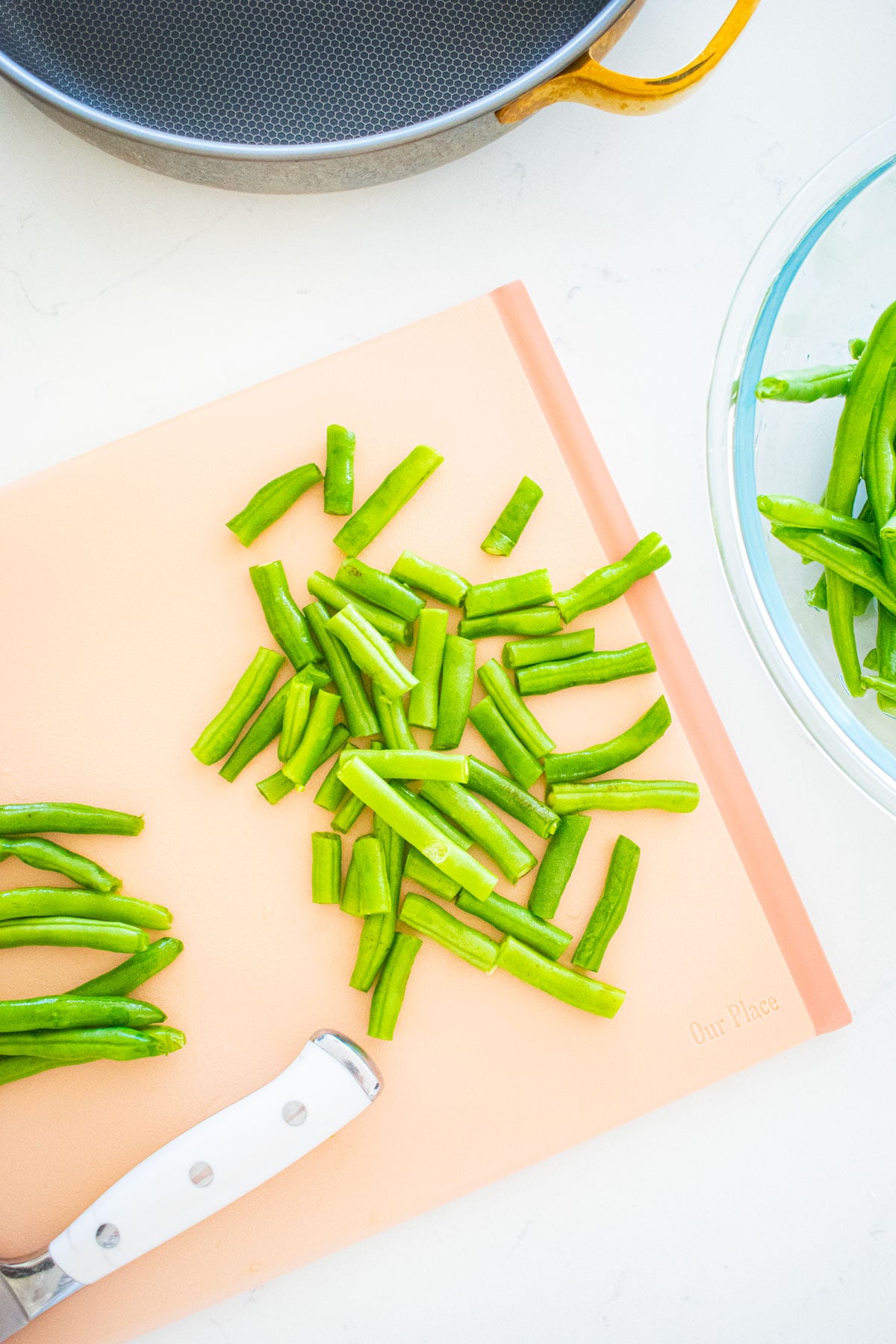
Our Place The Daily Board
- Price: $45
- 100% recycled plastic body with nonslip sides
- BPA-free
- Features inset side handles for super easy maneuvering
- Grainy texture makes for comfortable slicing, no-slide prep, and conceals knife marks
Cook With Color Cutting Board Set
- Price: $29.99
- BPA free and can be hand washed to remove stains after use, or washed in the dishwasher
- 3 different sizes
- Multiple color options
- Nonslip sides
Titanium
Titanium is a wonderful nontoxic choice. However it is a very hard surface and can feel awkward to chop on. I don’t use this style as a daily cutting board, but instead prefer to save this option for when it really makes a difference.
Titanium is one of my top choices for cutting raw meat because it can’t hold bacteria like wood boards can. I don’t cut raw meat often, so I don’t mind using this board when I have to.
Pros
- Non-porous, highly sanitary, and almost impossible to harbor bacteria or absorb odors — excellent for raw meat prep or frequent sanitizing.
- Durable and long-lasting; won’t warp, crack or degrade with time as some woods or bamboo might.
Cons
- Very hard surface — harsh on knife edges, dulling or damaging them quickly.
- Slippery when wet, and heavy — less ideal for everyday chopping of veggies or delicate slicing tasks.
Top Picks
Titanium Board Set
- Price $26.55
- 100% pure titanium – with a thickened design and won't harbor grooves or punctures from knife cut
- Dishwasher safe
- Designed for heavy use, durable and crack-resistant
I usually only use this type of board for cutting raw meats, like chopping chicken for Yellow Curry Chicken With Bone Broth.
My Picks for Best Non-Toxic Cutting Board
- Top Everyday Choice: Wood (like birch, acacia or maple), properly maintained with oil.
- Eco-Conscious Choice: Bamboo or certified solid-wood (from sustainable sources) — especially if avoiding plastic and prioritizing renewability.
- Best for Raw Meat: Stainless steel or titanium board — if you don’t mind dulling knives more often and perhaps sharpening more often. But, if you want easy sanitation and no worries, this is what I'd choose here.
My Recommendation for Most Homes
If your focus is on organic ingredients, clean eating, and safe cooking spaces, I’d recommend adopting a mix-and-match approach:
- Use a solid hardwood board (e.g., acacia or maple) or bamboo for daily chopping of produce, bread, veggies, cookie dough, etc.
- Keep a metal or titanium board or glass board on hand for raw meat or fish to simplify cleaning and sanitation.
More Baking Tips

The Bake Shop
Visit The Bake Shop for foodie inspired tees, sweatshirts, and accessories. Find my favorite kitchen tools (with discounts!) in the Kitchen Shop. And shop our collection of food inspired dog accessories too!


Leave a Reply