How to Make Brown Butter
Brown butter is a magical ingredient that adds a nutty, rich flavor to both sweet and savory dishes. It’s easy to make and can elevate your baked goods! Learn how to make brown butter to use in cookies, cakes, brownies, and more.
If you’re looking for more ways to elevate your baked goods, check out Best Salted Butter for Baking, Homemade True Caramel, How to Make Vanilla Sea Salt, Gingerbread Caramel Sauce, or How to Make Organic Candied Lemons.
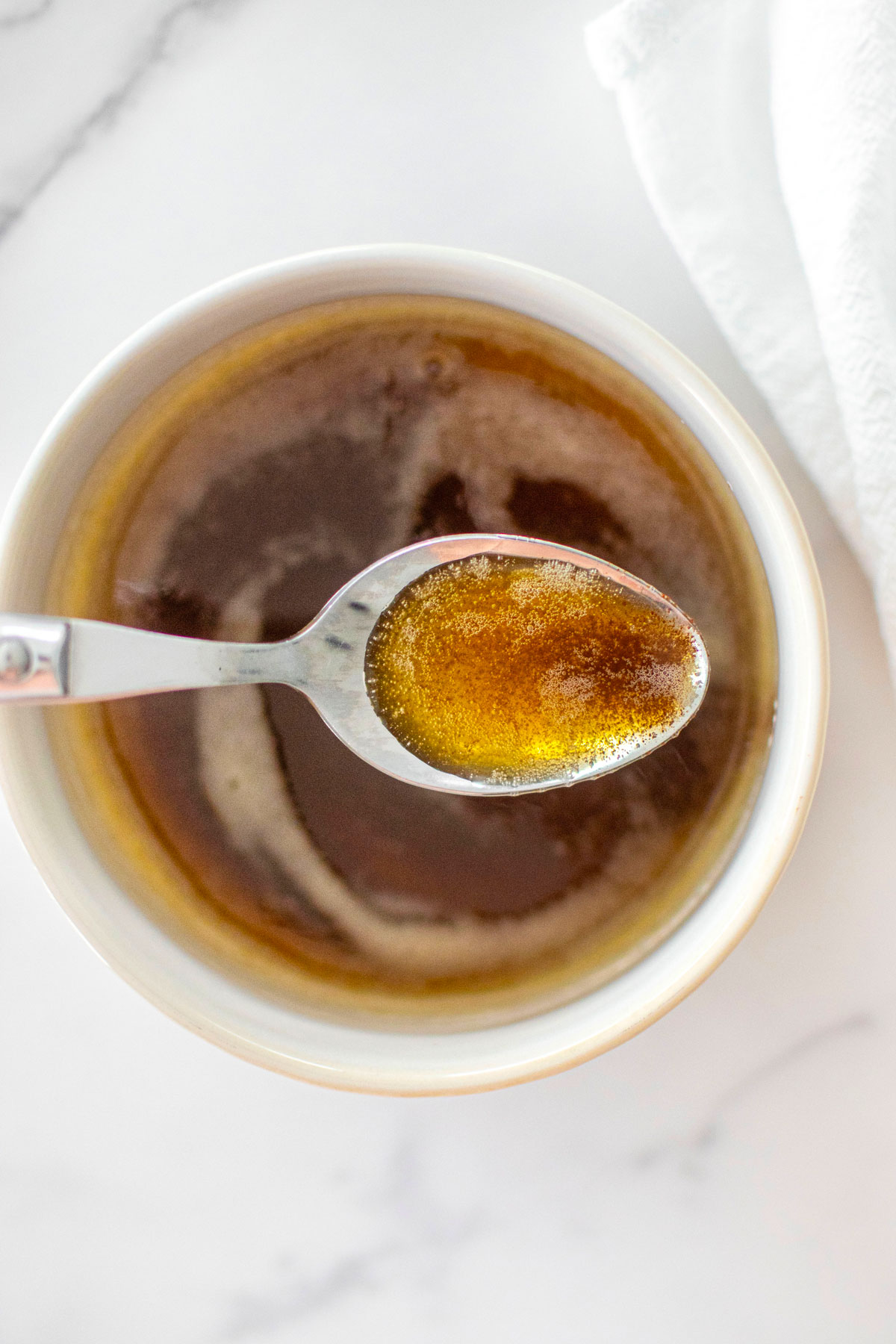
A Quick Look At The Recipe
- Recipe Name: How to Make Brown Butter
- Ready In: 10 minutes
- Makes: about 1/2 cup
- Main Ingredients: salted butter
- Flavor Profile: rich, nutty, slightly sweet
- Dietary Info: gluten free, no seed oils
- Difficulty: Easy!
- Why You’ll Love It: elevates everything you use it in
Summarize & Save This Content On
Why You’ll Love This Recipe
- Use for Anything: You can use brown butter in many different recipes! Everything from cookies to waffles, brown butter can enhance!
- One Ingredient: All you need is your favorite butter to make delicious, nutty, and sweet brown butter that will enhance any recipe.
- Quick and Easy: Once you learn the technique of making brown butter, it's quick and easy to make. This takes less than 10 minutes!
What is Brown Butter?
Brown butter is just regular butter that has been cooked over low/medium heat until the milk solids turn golden brown. This creates a complex flavor profile that’s both nutty and sweet and is reminiscent of toffee, caramel, or toasted nuts. This transformation occurs through a simple cooking process called the Maillard reaction.
The Maillard reaction happens between amino acids and reducing sugars and it creates the compounds that give browned food such a distinct flavor. As the water in butter evaporates and the milk solids toast, they undergo this process. This enhances the flavor of traditional butter to a magical sweet, nutty, and caramelized flavor!
Ingredients
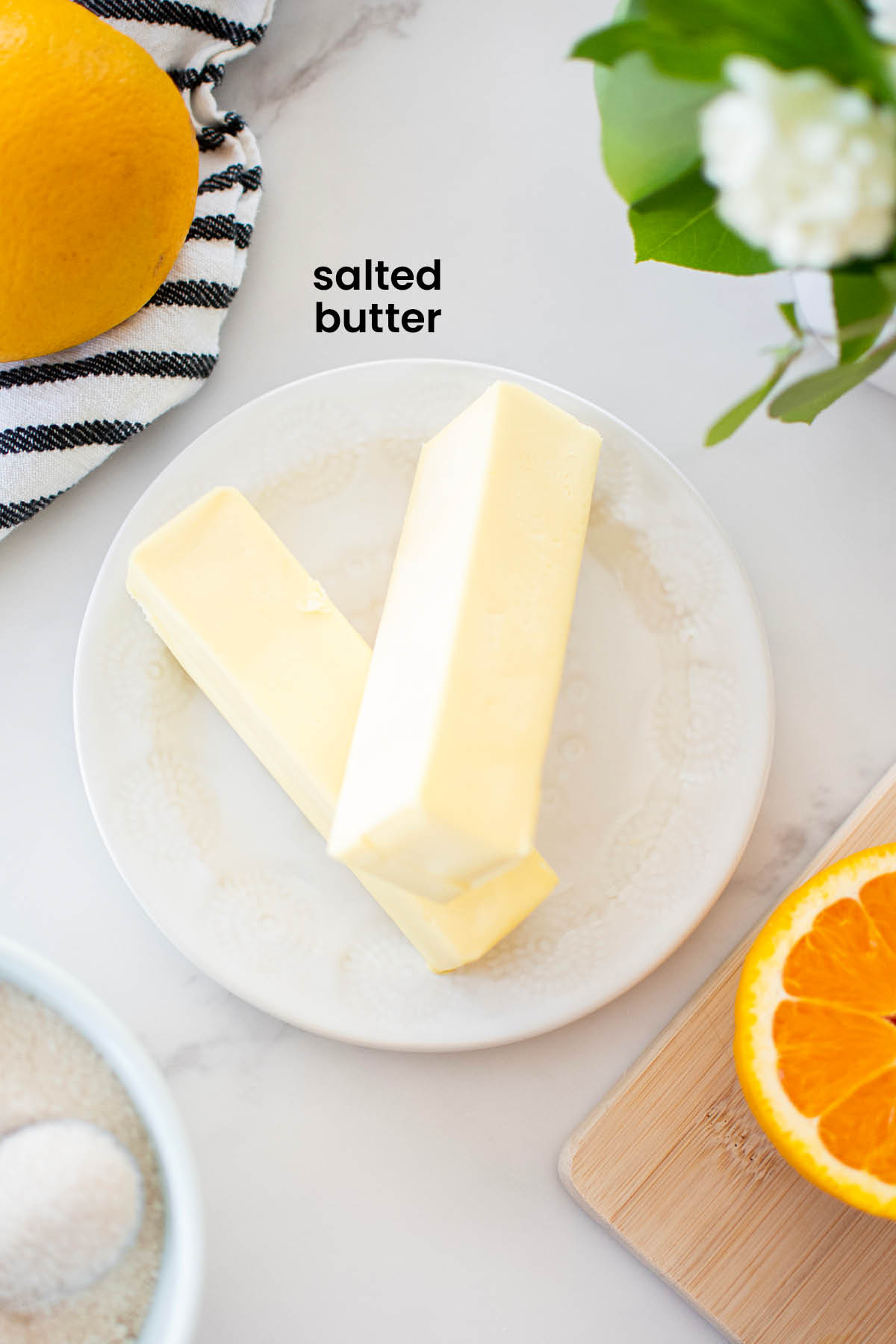
- Butter: You’ll just need organic butter to make browned butter. You can use salted or unsalted, your preference.
*For a full list of ingredients and measurements, visit the recipe card below.
Tips for Success
- Use the Right Tools: You’ll need a high heat spatula to stir the butter as it browns. Make sure to use a high heat spatula or you can melt your spatula (like I did, check the video, haha!). A light colored pot also helps, as you can see the butter color transform best.
- Stay Attentive: Brown butter requires constant attention. Don’t walk away from the stove! It takes less than 10 minutes, so just be prepared to stand over it the entire time.
- Experiment with Flavors: Try adding garlic, sage, or rosemary for an extra depth of flavor. Especially for savory recipes, herbs are a great addition.
- Substitute Properly: Because brown butter is made by cooking butter and evaporating the water, the amount of butter reduces. If you are substituting butter for brown butter in a recipe, be sure to weigh the brown butter to ensure you have the right amount. Typically, you’ll need 20% more butter when making brown butter.
- Use It Creatively: Brown butter can be used in pasta, baked goods, or as a drizzle over vegetables and meats!
How to Make Brown Butter
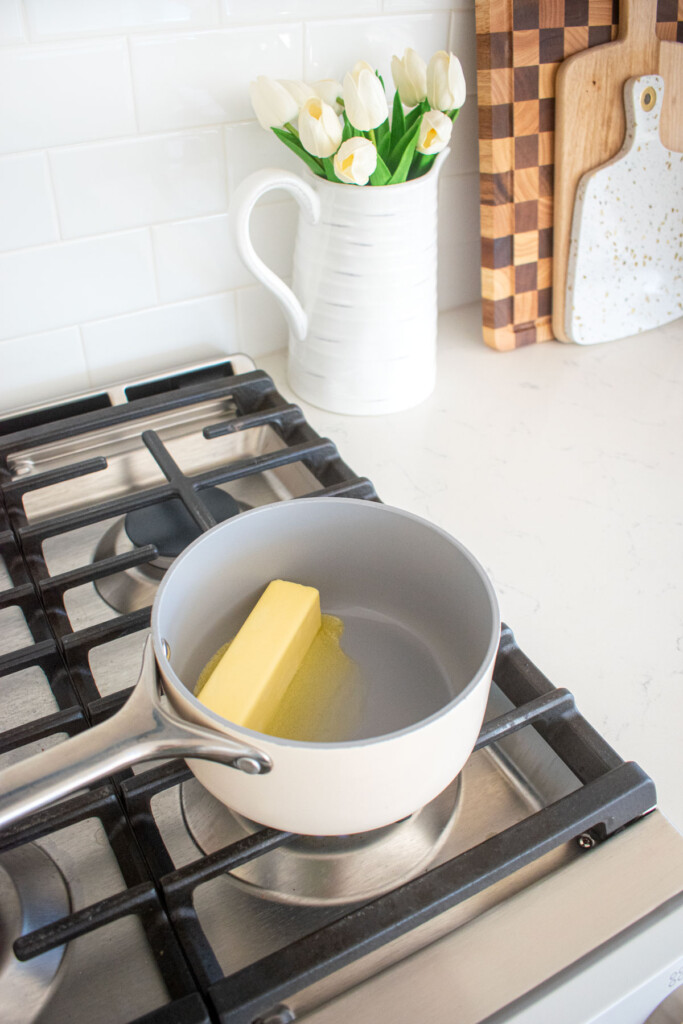
- Add the butter to the pot and put over low/medium heat.
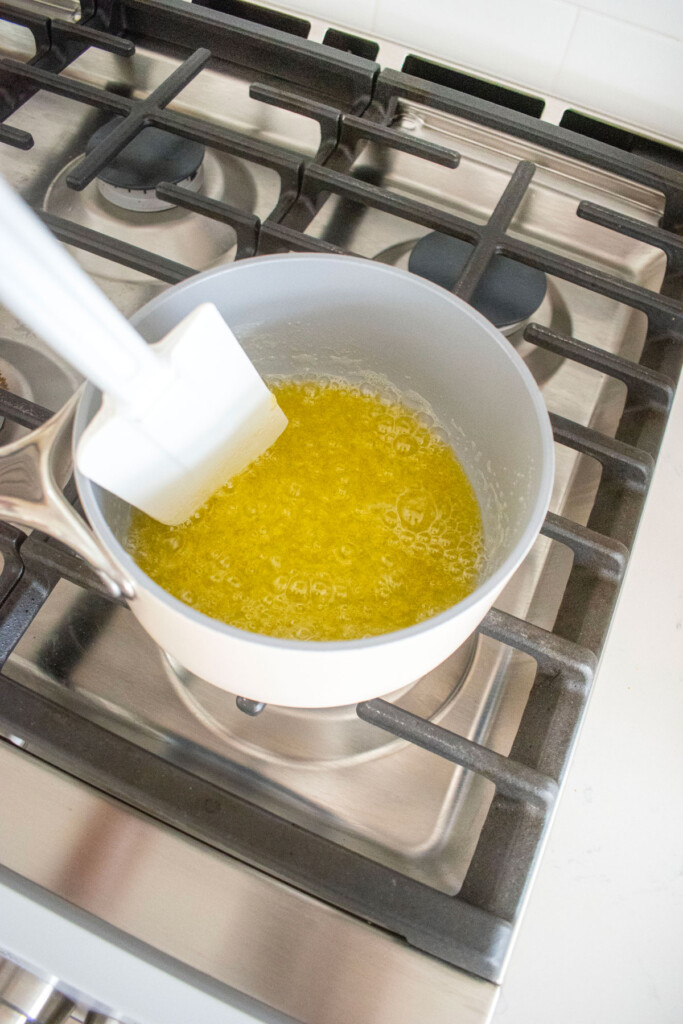
- Allow the butter to melt.
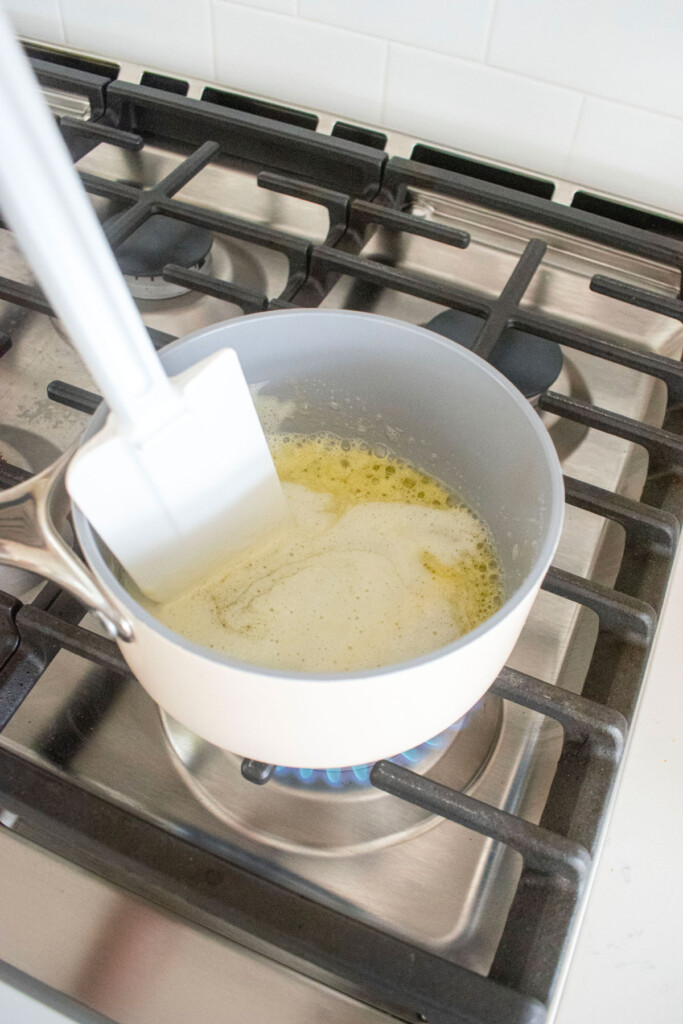
- As the butter melts, stir the butter occasionally to ensure even cooking. The butter may begin to bubble, foam or turn white. That’s okay if it does this, just ensure you are stirring so you can see the color of the butter below. If you’re having trouble seeing, remove the pot from the heat for a moment, check the color and put it back on if needed.
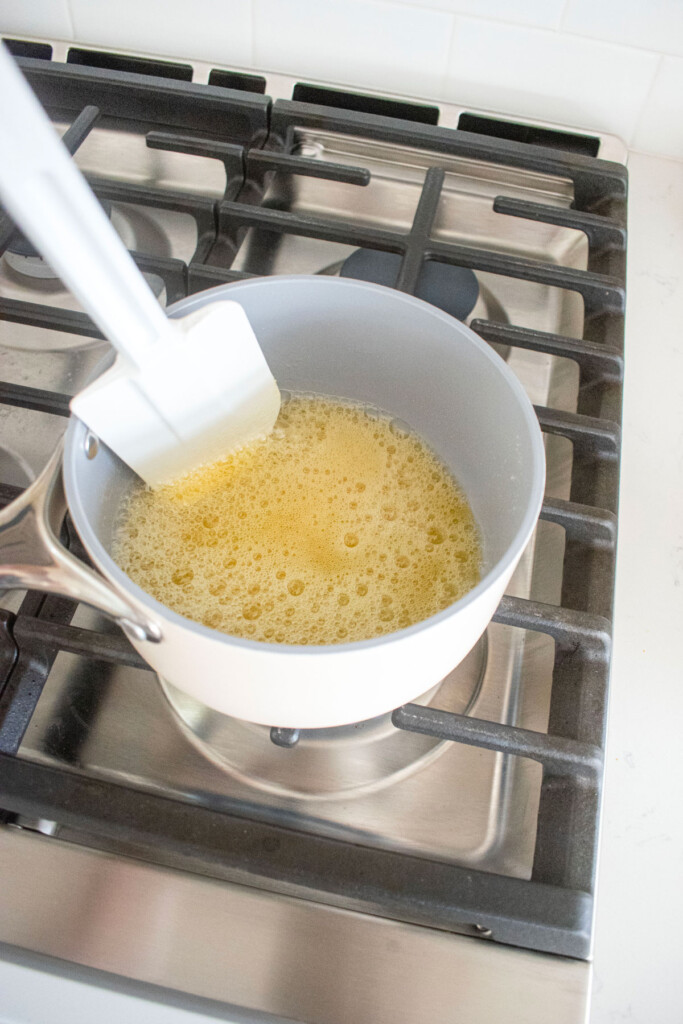
- Continue cooking, stirring frequently. As the butter cooks it will begin to turn from a bright yellow color to a light golden to a tan color.

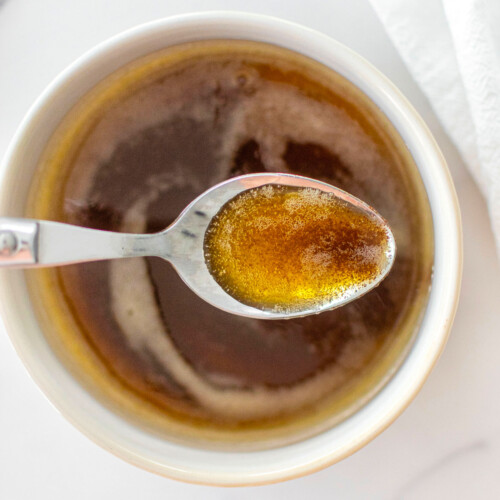
- You will start to see small brown specs appear. These are the toasted milk solids and they will sink to the bottom. As soon as this happens it’s ready.
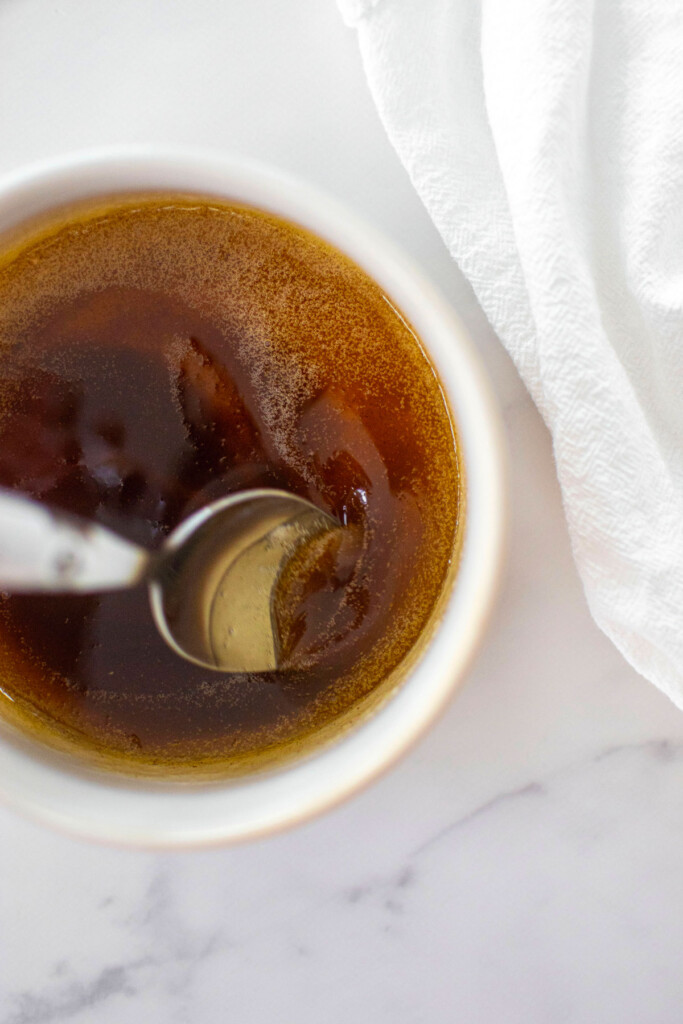
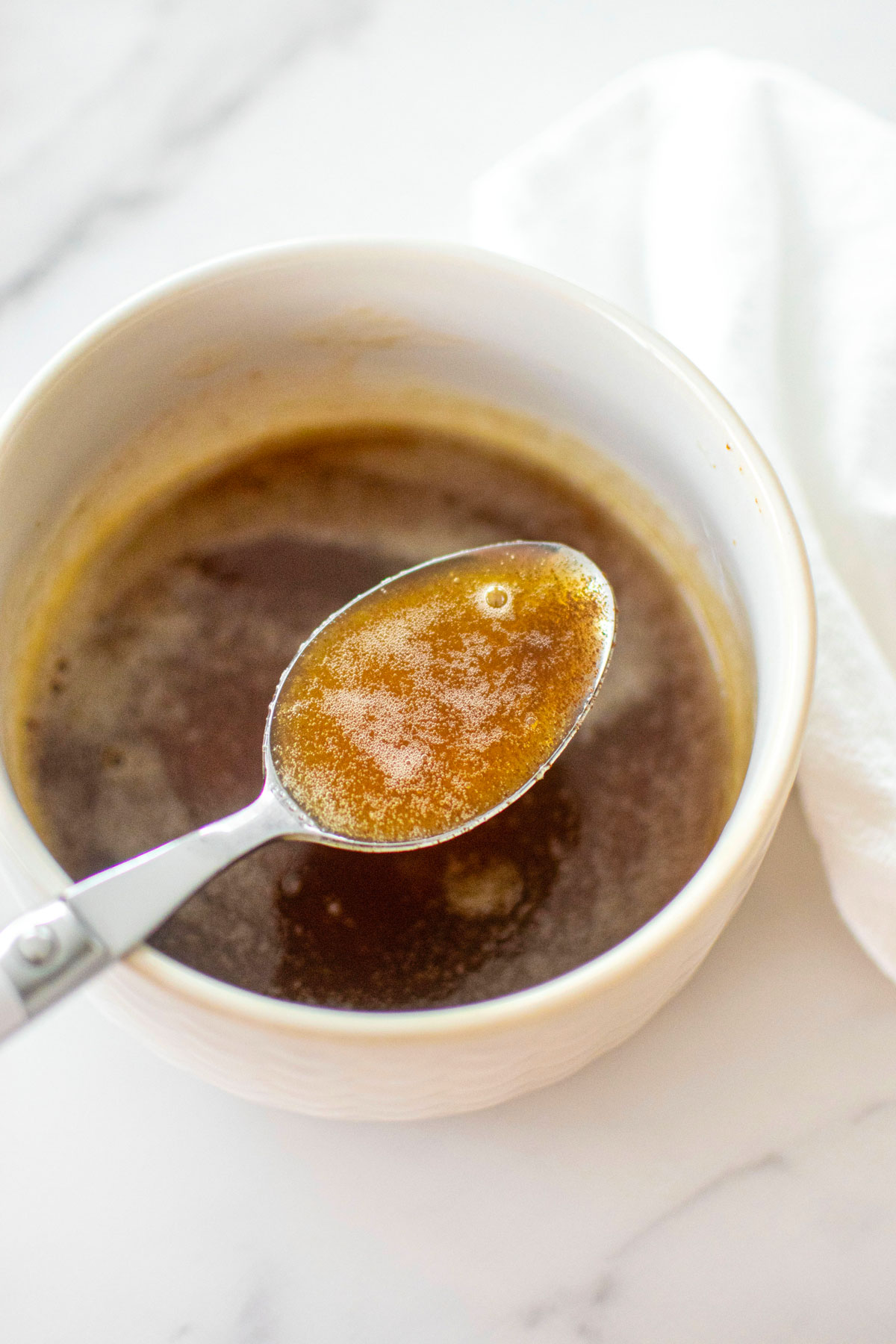
- Remove it from the heat immediately as it can easily burn. The brown butter is now ready to use in recipes if it calls for melted brown butter. If the recipe calls for softened or chilled brown butter you may need to allow the butter to chill before using it.
How to Properly Use Brown Butter In Recipes
- If a recipe calls for butter and then tells you to brown it in the instructions of the recipe, you do not need to add extra butter as the recipe is planning for that reduction.
- If you plan to substitute brown butter for regular butter in a recipe that doesn't specifically tell you to brown the butter, then you'll want to be sure you add a little extra butter before browning. Then, weigh the final brown butter to ensure you have the right amount of butter the recipe calls for.
- If you are substituting brown butter in a recipe, be sure to take note of how the butter is called for in the recipe (melted, softened or cold). If the recipe calls for melted, you can use it right after the brown butter is made. If it's called for softened, you'll need to let it sit out at room temperature to come back to a softened state. And if it's chilled, you'll need to refrigerate it until it's cold.
- My top trick for chilling brown butter is to place a piece of parchment paper in a tupperware, pour the melted brown butter into the tupperware and then add the lid. Chill, and then you can easily lift out the parchment paper and use the chilled butter as needed. This helps so much as it doesn't get stuck in a tupperware!
Ways to Use In Recipes
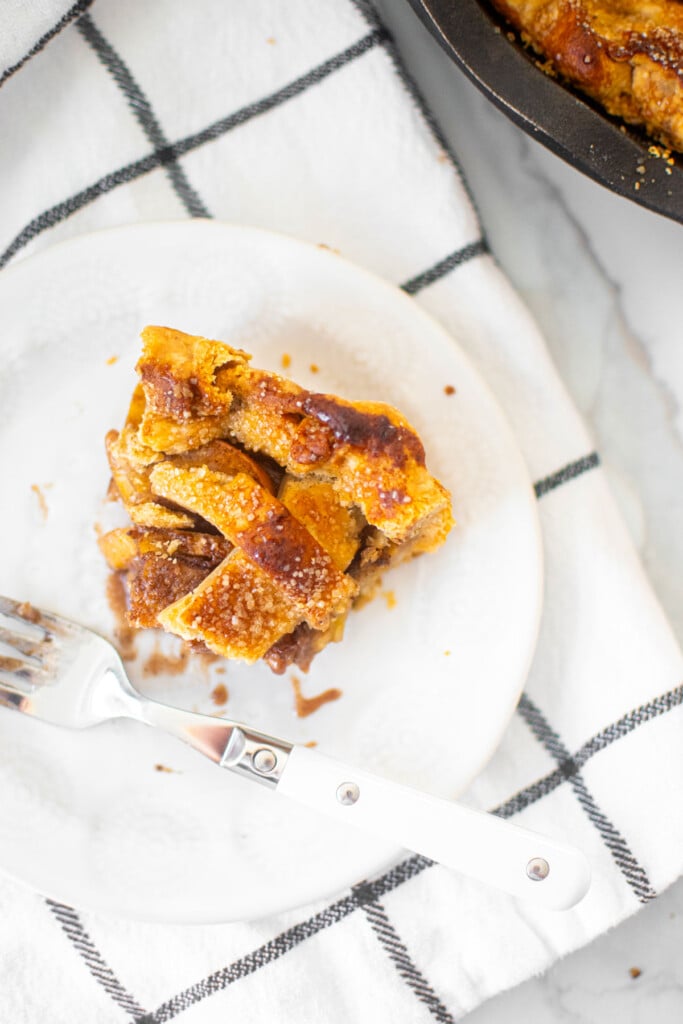
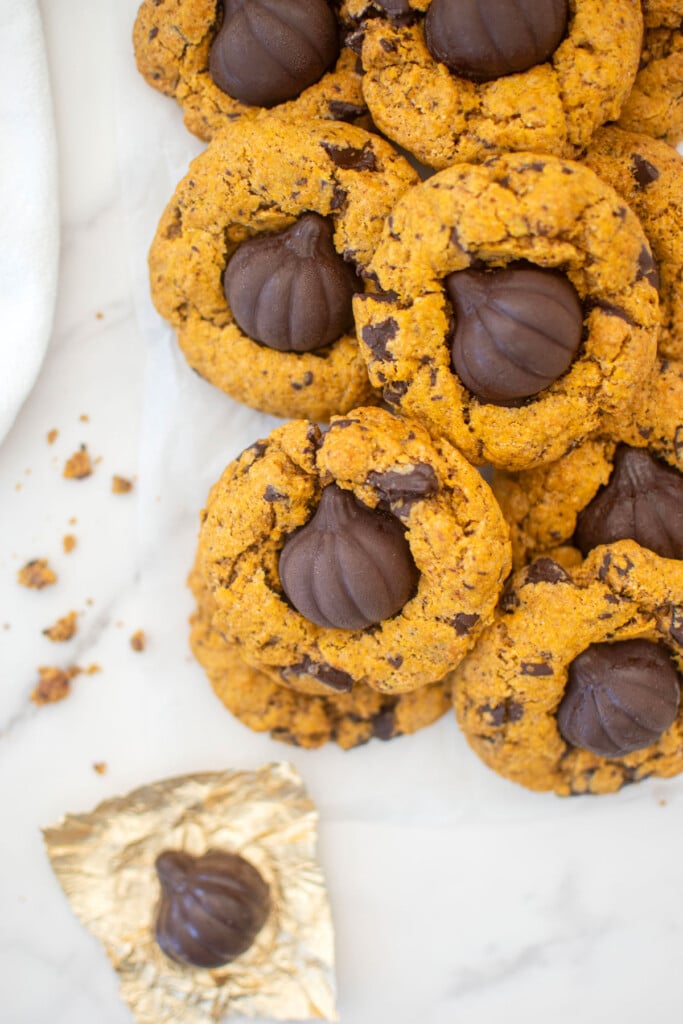
- Cookies, try Brown Butter Caramel Dark Chocolate Cookies or Brown Butter Pumpkin Cookies With Caramel
- Brownies and Blondies
- Cakes and cupcakes
- Buttercream frosting
- Use in caramel sauce or butterscotch (like my Brown Butter Butterscotch Sauce!)
- Waffles
- Pancakes
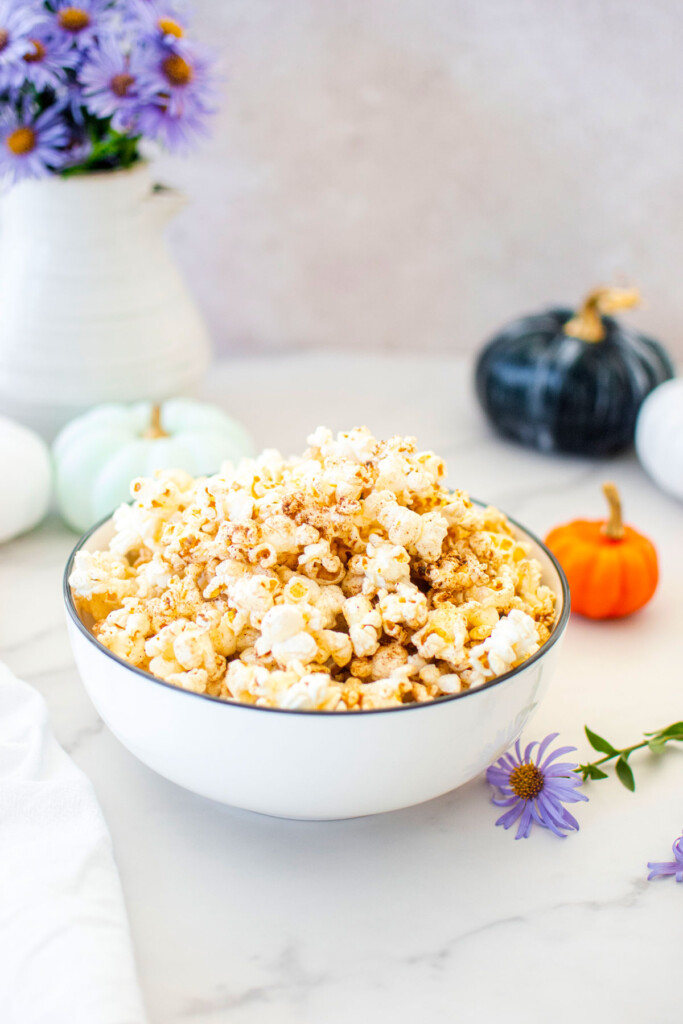
- Pour over popcorn (like Brown Butter Pumpkin Spice Popcorn)
- Pour over pasta
- Use in mashed potatoes
- Drizzle over sautéed veggies
Recipe FAQ’s
You can use brown butter just like you’d use regular butter in any recipe. If you’re following a recipe that doesn’t call for brown butter specifically, be sure to note if the butter is melted, softened, or chilled to ensure the brown butter is the same consistency for the recipe.
Yes! However, you will need to weigh the brown butter before using in recipes to ensure you have the right amount because brown butter reduces as it cooks. So if a recipe doesn’t specifically tell you to brown a certain amount of butter, and you just want to use brown butter in place of regular butter you’ll need to weigh the browned butter to ensure it’s the right amount for the recipe. Typically you’ll need 20% more butter.
You can store in an airtight container in the fridge for up to 1 month.
More Brown Butter Recipes

Loved it? Tell us!
Thanks a waffle lot for stopping by 🧇 If you loved this recipe, sprinkle some love by leaving a ⭐⭐⭐⭐⭐ review — it inspires others to try this recipe and helps me organically reach dog loving foodies like you! I personally read and appreciate every message!
Also, be sure to subscribe to our YouTube channel and join John John and me in the kitchen for step by step recipe videos! And subscribe to our newsletter for new and seasonal recipes!
How to Make Brown Butter

Equipment
- Small Pot
- High Heat Spatula
Ingredients
- 113 grams salted butter
Instructions
- Add the butter to the pot and put over low/medium heat.
- Allow the butter to melt.
- As the butter melts, stir the butter occasionally to ensure even cooking.
- The butter may begin to bubble, foam or turn white. That’s okay if it does this, just ensure you are stirring so you can see the color of the butter below.
- If you’re having trouble seeing, remove the pot from the heat for a moment, check the color and put it back on if needed.
- Continue cooking, stirring frequently.
- As the butter cooks it will begin to turn from a bright yellow color to a light golden to a tan color.
- You will start to see small brown specs appear. These are the toasted milk solids and they will sink to the bottom. As soon as this happens it’s ready.
- Remove it from the heat immediately as it can easily burn. The brown butter is now ready to use in recipes if it calls for melted brown butter.
- If the recipe calls for softened or chilled brown butter you may need to allow the butter to chill before using it.
Video

Notes
- You’ll need a high heat spatula to stir the butter as it browns. Make sure to use a high heat spatula or you can melt your spatula (like I did, check the video, haha!). A light colored pot also helps, as you can see the butter color transform best.
- Brown butter requires constant attention. Don’t walk away from the stove! It takes less than 10 minutes, so just be prepared to stand over it the entire time.
- Try adding garlic, sage, or rosemary for an extra depth of flavor. Especially for savory recipes, herbs are a great addition.
- Because brown butter is made by cooking butter and evaporating the water, the amount of butter reduces. If you are substituting butter for brown butter in a recipe, be sure to weigh the brown butter to ensure you have the right amount. Typically, you’ll need 20% more butter when making brown butter.
- Brown butter can be used in pasta, baked goods, or as a drizzle over vegetables and meats!
Nutrition
The Bake Shop
Visit The Bake Shop for foodie inspired tees, sweatshirts, and accessories. Find my favorite kitchen tools (with discounts!) in the Kitchen Shop. And shop our collection of food inspired dog accessories too!


This brown butter will elevate all your baked goods!