Lemon Rosemary Sourdough Bread
Rustic and light, this zesty Lemon Rosemary Sourdough Bread recipe is just the right amount of savory with the addition of lemon zest. Perfect with a big slab of butter or toasted to perfection to dip in soup.
If you're looking for more homemade bread recipes, check out Sourdough Discard Whole Wheat Sandwich Bread, Organic French Baguettes With Instant Yeast, Sourdough Discard Bread With Bone Broth, or Honey Butter Dinner Rolls.
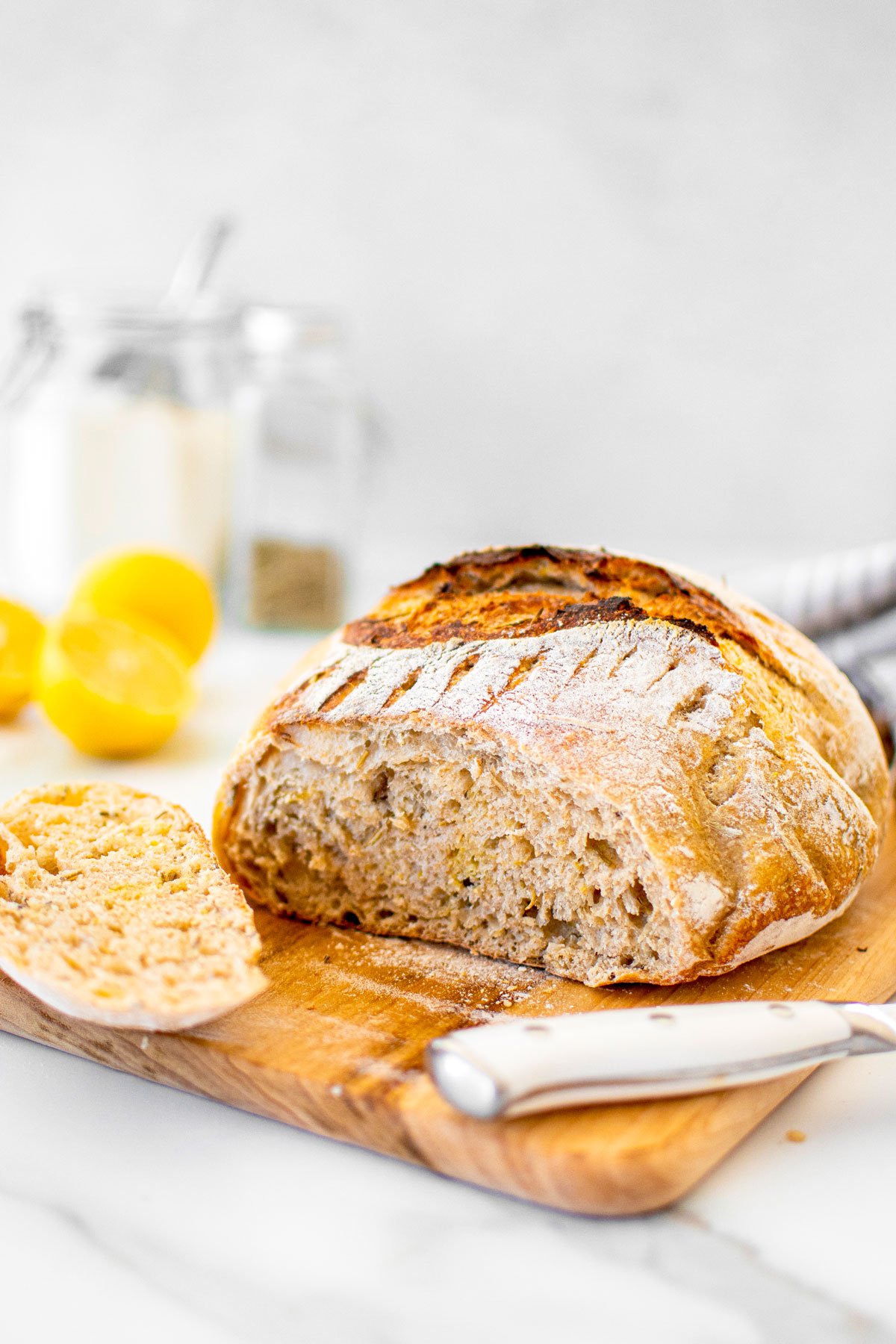
A Quick Look At The Recipe
- Recipe Name: Lemon Rosemary Sourdough Bread
- Ready In: 16 hours 45 minutes
- Makes: 10 servings
- Main Ingredients: bread flour, whole wheat flour, sourdough starter
- Flavor Profile: golden, crispy crust, subtle lemon tang and herbal rosemary tones
- Dietary Info: no seed oils, eggless, vegan
- Difficulty: Medium
- Why You’ll Love It: soft and tender with a crispy crust rustic rosemary sourdough bread
Summarize & Save This Content On
Why You'll Love This Recipe
- Beginner Friendly: This lemon rosemary bread recipe is one you can make even if you are beginner bread baker. And that is what I consider myself — a beginner or intermediate at best. I like easy organic bread recipes and this lemon rosemary bread recipe is easy!
- Proofs Overnight: This recipe is a two day process and this easy rosemary sourdough bread proofs in the fridge overnight. That way, you can wake up and bake it off right away. It gives you all day to eat this crusty and subtly sweet bread when it is at its best!
- High Altitude Tested: I baked my Lemon Rosemary Sourdough at high altitude and did the testing up here, Hannah baked hers at sea level. So, like all the recipes on my site, you can count on baking this no matter where you live! Just be sure to jump to the Notes section at the bottom for high altitude instructions.
- Bold and Zesty Flavor: The combination of aromatic rosemary and lemon compliment one another in this recipe giving you both bold and zesty flavor. This lemon rosemary bread is delicious with a slab of butter or even on a sandwich! If you love lemon and rosemary together, check out my Lemon Rosemary Sandwich Cookies too!
This recipe is a collaboration with my good friend Hannah at Make It Dough. We have come together on many sourdough recipes so you get double tested recipes that we both had a hand in creating!
Check out some of our other sourdough recipe collabs like Sourdough Blueberry Crumb Bars, Sourdough Crescent Rolls, Baked Chai Donuts with Sourdough Discard, or Sourdough Strawberry Pop Tarts.
Ingredients
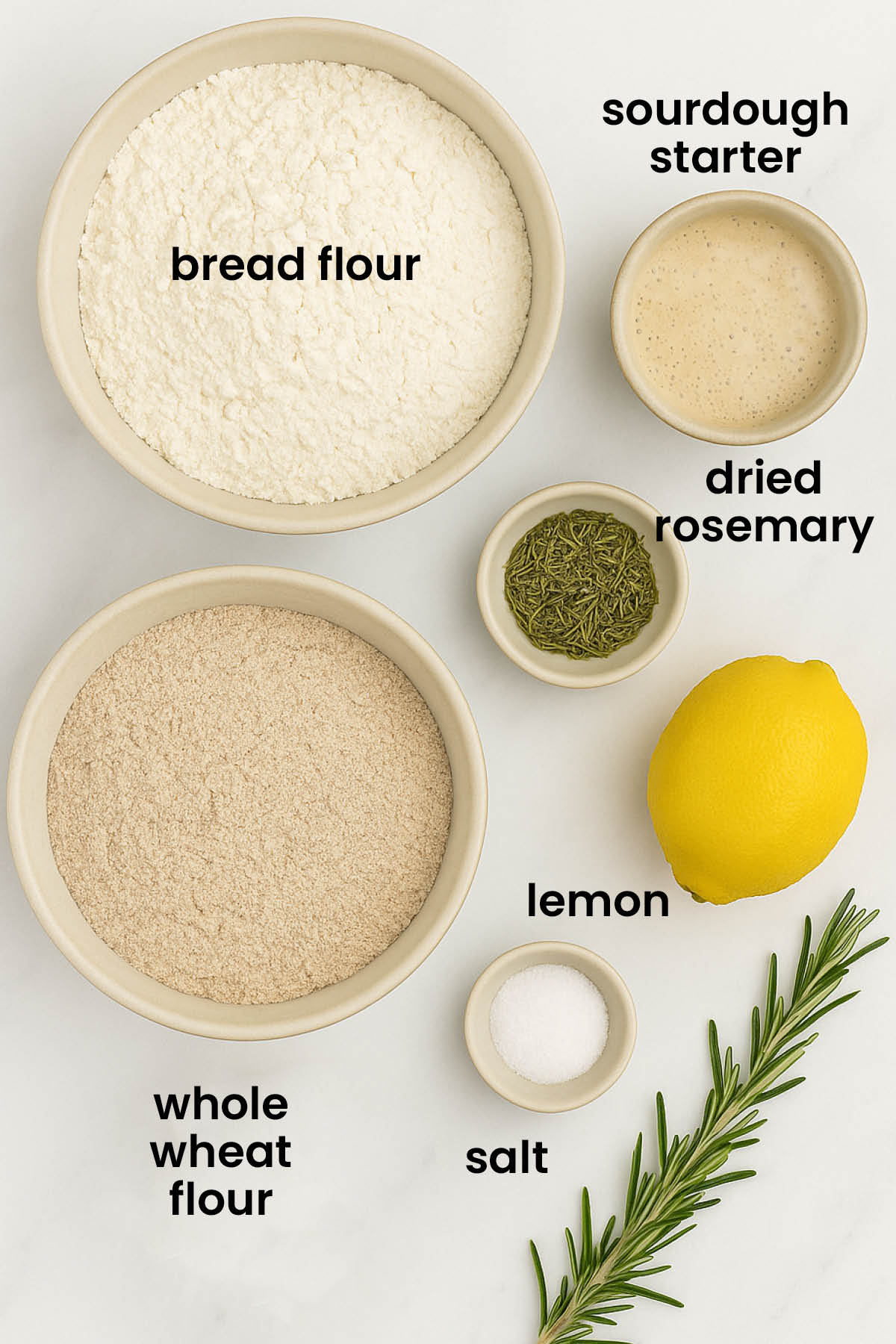
- Bread Flour: I use King Arthur Organic Bread Flour, which is a favorite. Bread flour gives this a chewy texture as opposed to all purpose flour.
- Whole Wheat Flour: Whole wheat flour gives this bread some more depth of flavor and a little darker color.
- Lemons: This organic bread has fresh lemon rind in it, giving it extra flavor!
- Sourdough Starter: You'll need to have an active sourdough starter for this recipe.
- Dried Rosemary: Using dried rosemary over fresh herbs in this recipe gives you the best flavor as dried will have more flavor than fresh.
*For a full list of ingredients and measurements, visit the recipe card below.
Organic Sourdough Bread Recipe Tips
- Make sure your starter is active. It will have bubbles in it when it's active.
- If your starter has not been in the fridge, ensure to remove it and feed it multiple times until it's active and shows bubbles. This may take a few hours or even up to 24 hours, depending how long it's been in the fridge.
- I use dried rosemary for the most potent flavor, but if you want to use fresh, you'll need double the amount.
- Fresh organic sourdough bread is best enjoyed the day of. If you need to store it, use an airtight container like a zip bag.
- This organic sourdough bread recipe is a 2 day process. If you need fresh bread the day of, try my Organic French Baguettes With Instant Yeast!
- High Altitude — Bake at 500°F covered for 15 to 20 minutes, and uncovered for 5 to 10 minutes, depending on how dark you’d like the crust.
How to Make Lemon Rosemary Sourdough Bread
Step 1
Autolyse: In a large mixing bowl, combine bread flour, whole wheat flour, and water. Using a wooden spoon or spatula, stir the ingredients together until no traces of dry flour remain. Cover the bowl with plastic wrap, set in a warm place and let the dough rest for 1 hour.
Step 2
Prepare the inclusions: Zest the lemon and set aside.
Step 3
Add the starter and inclusions: Add the sourdough starter, salt, dried rosemary and lemon zest to the autolysed dough. Fold the dough over the sourdough starter and the inclusions until fully incorporated. Cover the bowl with plastic wrap and set in a warm place for 30 minutes.
Strengthen the dough: Perform a coil fold by picking the center of the dough with your fingertips. Lift the dough until the ends release from the bowl. Turn the bowl 90 degrees and perform another coil fold. Transfer the dough to a clean, lightly-oiled bowl, cover with plastic wrap and set in a warm place for 30 minutes.
Step 4
Working in the bowl, complete 3 to 4 more sets of stretches, these same coil folds, in 30 minute intervals. Cover the bowl with plastic wrap and set in a warm place after each fold. Once the dough looks smooth and feels strong, let the dough rest untouched for 1 hour.
Step 4
Preshape the dough: Turn the dough out on a lightly floured surface. Using a bench scraper, turn the dough over and gently round it into a tight ball. Cover the dough with a tea towel and leave the dough to rest for 30 minutes.
Step 5
Shape the dough: Shape the dough into a boule or a batard. Cover the bowl with plastic wrap.
Cold proof: Place the dough in the refrigerator to proof overnight.
Step 6
Prep: Preheat the oven to 500°F with a Dutch oven inside. Score the dough: Turn the dough out onto a piece of parchment paper. Using a sharp knife, cut a large gash on the dough at least ¼ to ½-inch deep.
Step 7
Bake: Transfer the dough into the Dutch oven with the parchment paper. Bake covered for 25 to 30 minutes and uncovered for 10 to 15 minutes, depending on how dark you’d like the crust. Transfer the bread to a wire rack and allow it to cool for at least 2 hours before slicing.
Lemon Rosemary Sourdough Bread FAQ's
When your starter is active and ready it's visibly bubbly, smells tangy or yeasty and it doubles in size in a 4 to 8 hour period.
Homemade crusty bread (like this easy rosemary sourdough bread) is always best when eaten right away. So, if you are planning to bake it for Thanksgiving then prep it the day before and bake it the day of.
If you don’t have lemon, you can omit the lemon from this recipe and you’ll just have rosemary sourdough bread, which would also be good!
The inclusions are added with the starter in this recipe.
If you grated too far into the lemon, you'll hit the pith (the white part) this part of the lemon can be bitter.
If your bread didn't rise, your starter could be weak. This can also happen if your kitchen is very cold, bread will rise better in a warmer place. So, you can always place your dough by a warm oven or fireplace to help it rise better if it's cold in your house.
Dutch ovens are made of cast iron, which conduct heat really well. This helps ensure that there is even heat distribution to cook the bread very hot. It also helps hold in steam. We remove the lid to brown the crust during the last portion of baking.
If your starter was not active or too weak, your bread can be more dense. If you skipped the coil folds this can also cause your bread to be more dense.
If you didn't bake your bread hot enough, there wasn't enough steam, or you didn't let it cool properly. The bread needs to cool completely, uncovered for the crust to stay crispy.
This ensures the bread has time to cool completely and finish the internal cooking process, allowing the starches to set. This helps prevent a gummy texture.
This bread is light and slightly sweet and bursting with rosemary flavor. It is amazing with just a pad of butter as snack. Or serve it as a side with my Chicken Sausage Greek Salad.
This lemon rosemary bread recipe is a crusty sourdough bread, which means it’s best when eaten the same day it’s baked. That is the magic of the crust. But I know that it is not always possible to eat an entire loaf of bread in one day (and yet it also is). So, if you are storing it then an airtight container is the best option to retain moisture. This can be a zip bag, Tupperware, or a cake dome. Main thing is don’t let it dry out.
Serving Ideas
- I love this as a side to cozy meals like Mushroom Zucchini Baked Pasta, Butter Parmesan Pasta With Italian Sausage, Slow Cooker Beef Brisket Stew, Baked Butter Lemon Pasta Without Cheese, and Organic Meatloaf With Bone Broth.
- This makes a great sandwich bread with leftover holiday meats like Slow Cooker Turkey, Roasted Herb Butter Turkey, and Savory Mustard Herb Ham.
- Use slices that have lost some of their moisture to make Meyer Lemon French Toast.

More Homemade Bread Recipes



Loved it? Tell us!
Thanks a waffle lot for stopping by 🧇 If you loved this recipe, sprinkle some love by leaving a ⭐⭐⭐⭐⭐ review — it inspires others to try this recipe and helps me organically reach dog loving foodies like you! I personally read and appreciate every message!
Also, be sure to subscribe to our YouTube channel and join John John and me in the kitchen for step by step recipe videos! And subscribe to our newsletter for new and seasonal recipes!

Lemon Rosemary Sourdough Bread

Equipment
- Mixing Bowl
- 5.5-quart Dutch Oven
- Parchment Paper Sheets
Ingredients
- 300 grams bread flour
- 90 grams whole wheat flour
- 282 grams warm water
- 113 grams active sourdough starter
- 8 grams fine sea salt
- 6 grams dried rosemary
- 1 medium lemon
Instructions
Day 1
- Autolyse: In a large mixing bowl, combine bread flour, whole wheat flour, and water. Using a wooden spoon or spatula, stir the ingredients together until no traces of dry flour remain. Cover the bowl with plastic wrap, set in a warm place and let the dough rest for 1 hour.
- Prepare the inclusions: Zest the lemon and set aside.
- Add the starter and inclusions: Add the sourdough starter, salt, dried rosemary and lemon zest to the autolysed dough. Fold the dough over the sourdough starter and the inclusions until fully incorporated. Cover the bowl with plastic wrap and set in a warm place for 30 minutes.
- Strengthen the dough: Perform a coil fold by picking the center of the dough with your fingertips. Lift the dough until the ends release from the bowl. Turn the bowl 90 degrees and perform another coil fold. Transfer the dough to a clean, lightly-oiled bowl, cover with plastic wrap and set in a warm place for 30 minutes.
- Working in the bowl, complete 3 to 4 more sets of stretches, these same coil folds, in 30 minute intervals. Cover the bowl with plastic wrap and set in a warm place after each fold. Once the dough looks smooth and feels strong, let the dough rest untouched for 1 hour.
- Preshape the dough: Turn the dough out on a lightly floured surface. Using a bench scraper, turn the dough over and gently round it into a tight ball. Cover the dough with a tea towel and leave the dough to rest for 30 minutes.
- Shape the dough: Shape the dough into a boule or a batard. Cover the bowl with plastic wrap.
- Cold proof: Place the dough in the refrigerator to proof overnight.
Day 2
- Prep: Preheat the oven to 500°F with a Dutch oven inside. Score the dough: Turn the dough out onto a piece of parchment paper. Using a sharp knife, cut a large gash on the dough at least ¼ to ½-inch deep.
- Bake: Transfer the dough into the Dutch oven with the parchment paper. Bake covered for 25 to 30 minutes and uncovered for 10 to 15 minutes, depending on how dark you’d like the crust. Transfer the bread to a wire rack and allow it to cool for at least 2 hours before slicing
Notes
- Use weight measurements over volume for the best results whenever baking bread.
- Use a zester for ease when adding the lemon rind to make it easier!
- While I provide time estimates, fermentation can always vary based on the climate of your kitchen. Always look for visual signs before moving to the next step whenever making bread.
- If you want to use fresh rosemary, you'll need double the amount.
- High Altitude — Bake at 500°F covered for 15 to 20 minutes, and uncovered for 5 to 10 minutes, depending on how dark you’d like the crust.
Nutrition
The Bake Shop
Visit The Bake Shop for foodie inspired tees, sweatshirts, and accessories. Find my favorite kitchen tools (with discounts!) in the Kitchen Shop. And shop our collection of food inspired dog accessories too!

This bread goes with everything!