How Much Homemade Food Should I Feed My Dog?
This may be the most asked question I get. How much homemade food should I feed my dog? It’s a thing that dog owners will struggle with if they are new to cooking homemade food. So, I’m going to give you an easy step by step formula to determine exactly how much homemade food to feed your dog.
If you are looking for homemade dog food recipes to start your fresh food journey with your fur baby, check out some of John John’s favorite recipes like Chicken Dinner Recipe for Dogs, Beef Liver Dinner Recipe for Dogs, or How to Cook a Whole Chicken for Dog Food.
In This Guide
- How much homemade dog food should I feed my dog?
- Simple formula to follow based on your dog's weight
- How much protein, carbs, veggies and fruits to feed your dog
- Examples of how to calculate how much homemade food your dog needs
- Vet Approved How to Cook Homemade Dog Food Course
Summarize & Save This Content On
Jump to:
- In This Guide
- How much homemade dog food should I feed my dog?
- How to Cook Homemade Dog Food (Vet-Approved, Balanced and Simple)
- How Much Homemade Food to Feed Your Dog
- How do you calculate how much homemade food to feed your dog?
- Formula for How Much Homemade Dog Food to Feed Your Dog
- How do you translate this into ounces?
- How much protein vegetables and carbs does a dog need daily?
- Is feeding homemade food better for your dog?
- Homemade Dog Food Recipes
- The Bake Shop
How much homemade dog food should I feed my dog?
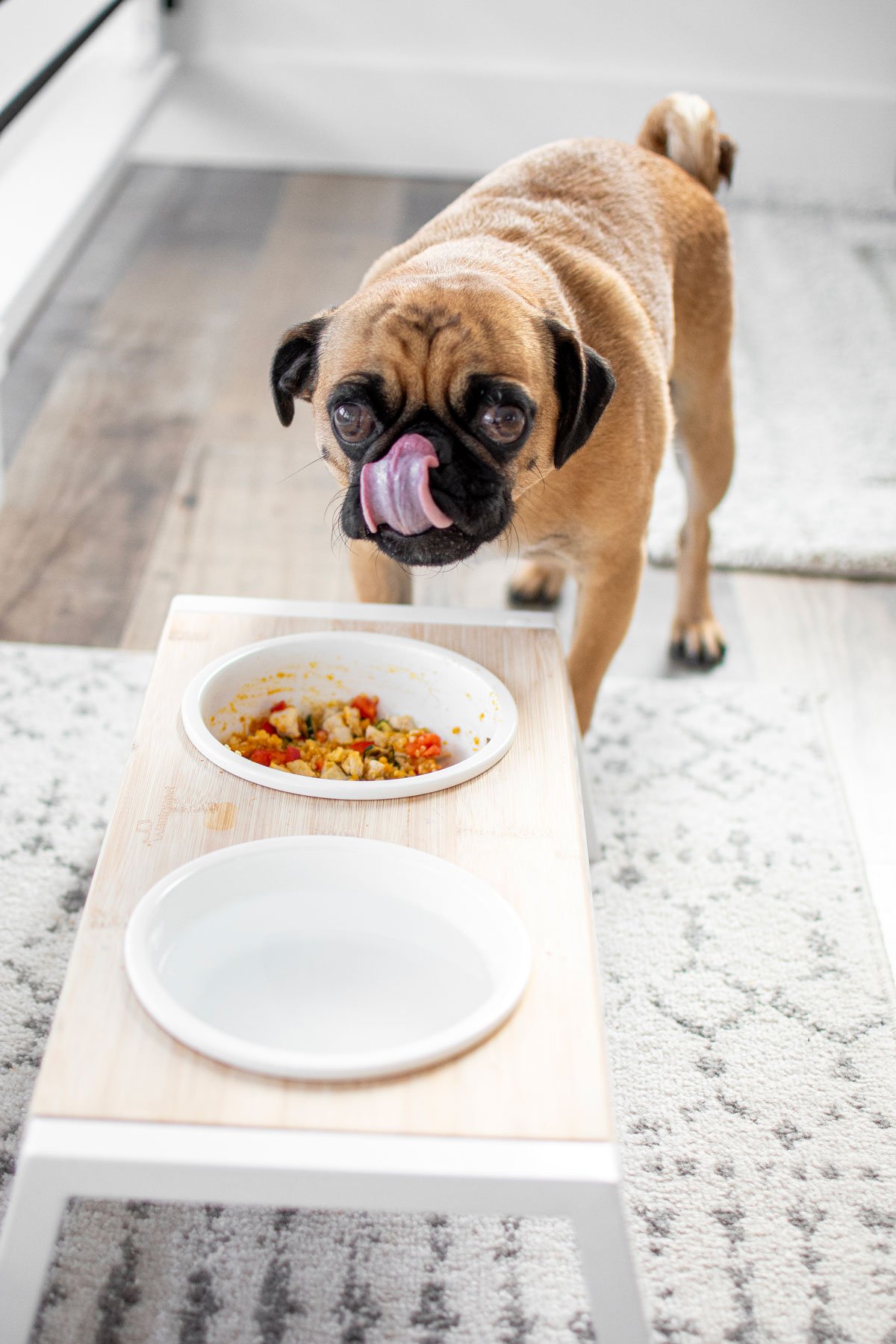
When preparing homemade food for your dog, you are probably wondering how much homemade dog food to feed your dog. You don’t want to over feed because your dog can gain weight and you don’t want under feed because your dog can be hungry! You need that perfect balance to keep your dog healthy, happy, and full — just like you do for yourself.
Just like with humans, all dogs are a little different. And food will depend on their age, activity level, and current weight. You will have to adjust for all three of these things throughout their life, so the amount of food may vary during different life phases, just like with yourself.
The best way to figure out the perfect amount of food for your dog is to test it, just like you would for yourself. The only difference being your dog will probably not tell you when they are full — though, they might! It depends on your dog, just like some people will eat even if they are full and some will not.
How to Cook Homemade Dog Food (Vet-Approved, Balanced and Simple)
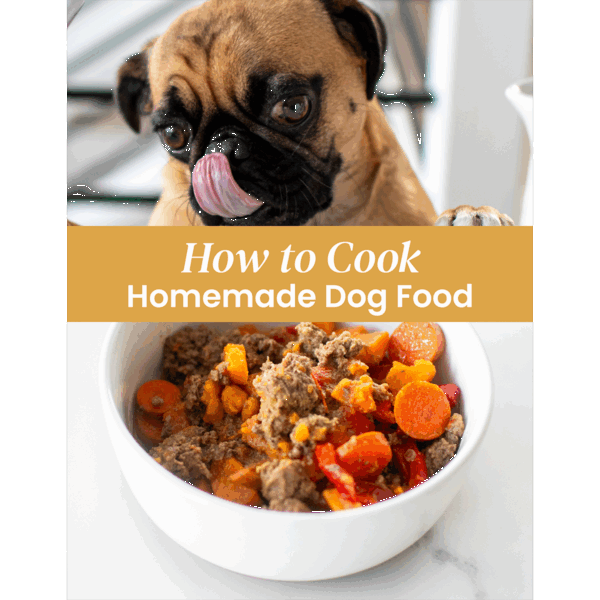
Real food for dogs, real confidence for you! Learn how to cook homemade, balanced, vet-approved meals for your dog with this beginner friendly course. Includes recipes, a supplement guide, a fresh food feeding calculator, batch cooking and meal prepping tips, plus email support so you can confidently feed your dog fresh food at home.
How Much Homemade Food to Feed Your Dog
Your dog should be getting anywhere from 2% to 5% of their total body weight in homemade food. If your dog is smaller, they could even need more! Dogs weighing 20 pounds or less can require a higher percentage of food per their body weight, with some needing as much as 10%.
Be sure to be mindful of treats as well, as you don't want to give dogs too many treats! If you do treat often for training, account for that and serve them a little less at meal time. Try some of our homemade dog treat recipes like How to Make Beef Liver for Dogs or Mini Peanut Butter Oat Dog Treats.

How do you calculate how much homemade food to feed your dog?
First you need to decide what percentage of body weight you want to go off for your dog. Take these factors into consideration when choosing.
If your dog is small, you know you’ll be higher. And, if your dog is a puppy, go higher. If your dog is very active, go higher. And if your dog is trying to gain weight go higher. Contrary, if your dog is not very active, then go lower. If your dog is trying to lose weight, go lower.
Now, all of this can be adjusted any day and anytime! If you went high because your dog was trying to put on weight, and they did, then maybe go a bit lower for their maintenance weight. And if your dog is trying to loose weight and they did, then maybe stay where you are and see if they gain or lose, and adjust from there. You get the idea.
So, this is not set in stone. Just like for humans, the amount of food you eat per day can drastically change depending on your needs.
Formula for How Much Homemade Dog Food to Feed Your Dog
Your Dog’s Current Weight x % of Their Total Body Weight =
Total Pounds of Food Per Day
For percentage of body weight, use the decimal, so 4% is .04.
Let’s break this down using John John as an example. John John is 20 pounds, he’s fairly active, but also small. I aim for about 4% of his body weight in food (this doesn't include treats). So, that formula looks like this:
20 x .04 = .08 pounds of food per day
I feed him about .8 pounds of food per day, split up between meals. I don’t count his treats, as those are treats. If your dog eats more treats (like John John, I can't take away his treats like Beef Dog Treats or Mini Peanut Butter Oat Dog Treats), then lower the food % a bit. If they don't, you can raise it a bit as well.

How do you translate this into ounces?
If you want to take the total pounds and convert that to ounces so you can easily measure it out on a digital kitchen scale, then just multiply the total by 16 because there are 16 ounces in 1 pound.
So, for John John that is:
.8 x 16= 12.8 ounces of food per day
If I want to split that up between 2 meals that is 6.4 ounces of food per meal. And if I split it up between 4 meals, that’s 3.2 ounces of food per meal. So, depending on how many meals your dog eats, you can split it up any way you like.
Having a digital kitchen scale is key for feeding your dog homemade food as it really helps to measure accurately, especially if you are needing to watch your weight for your dog.
I hope this helps you feel confident in making homemade food for your dog! It’s really very simple, and once you get the hang of it, it’s just as easy as cooking food for yourself.
How much protein vegetables and carbs does a dog need daily?
Dogs should get 40% protein (such as chicken, turkey, beef, lamb), 10% organ meats (beef liver, kidney, heart), 40% vegetables, and 10% carbs.
Once you have your total amount of food per meal calculated. Then, you can break that down into protein, veggies, and carbs. Here's an example using John John.
He eats 12.8 ounces of food per day in two meals. So, here's how that looks for each meal.
- 40% Protein: 2.5 ounces
- 10% Organ Meat: .6 ounces
- 40% Veggies: 2.5 ounces
- 10% Carbs: .6 ounces
Once you have an idea of what this looks like for each meal. You can use a specific bowl or measuring cup and eyeball this too. So long as your dog isn't gaining or loosing weight, you do not have to be down to the exact ounce.
This formula is just a great starting point to ensure you are balancing your dog's homemade food.
Is feeding homemade food better for your dog?
Feeding your dog homemade food is a great way to boost your dog's health and wellness. Commercially made kibble is the equivalent of processed food for humans. You wouldn't feed yourself or your children processed food for their entire lives, right? So think about it like that for your dog!
If you do switch to real homemade food for your dog, you may even notice your dog can eat more and not gain weight. Or they can eat about the same as before and lose weight. Why is this? It's the same reason why humans who stop eating processed foods and stick to real whole foods can easily lose weight, it's the same exact thing for your dog!
If you can't cook all your dogs meals, even just making homemade food part of their weekly menu is a great idea! Try an easy recipe like Salmon Dinner Recipe for Dogs or Turkey Dog Food Recipe that uses ingredients you would also use to make dinner! However much homemade food you can do for your dog will be a benefit!
So, if you can make homemade dog food once a week (such as meal prepping How to Cook Ground Turkey For Dogs, veggies, How to Cook Rice For Dogs, and squash for example) and they eat that up and then continue dog food again until Sunday, then they will still benefit! It's not all or nothing for dogs, they can switch back and forth, and the more real whole foods they can eat, the more birthdays they'll celebrate.
If you want to learn more about cooking homemade dog food, be sure to check out our course How to Cook Homemade Dog Food (Vet-Approved, Balanced and Simple). In this course, you'll learn how to safely cook homemade dog food, which supplements to use, and more!
And if you want additional help learning how to feed your dog homemade, I am a Dog Food Coach, just email me at hello@mimisorganiceats.com if you'd like to work together one on one. And, be sure to check out Best Food Names for Dogs if you are expecting a new puppy!


The Bake Shop
Visit The Bake Shop for foodie inspired tees, sweatshirts, and accessories. Find my favorite kitchen tools (with discounts!) in the Kitchen Shop. And shop our collection of food inspired dog accessories too!


My dog fluctuates between just under 5kg to 5kg. How does that convert to lbs/oz ?
I’m so glad I found you. Even though the brands of pumpkin tins etc not available in the country I live , I simply buy fresh pumpkin seeds and crush to powder. I really love how you say it’s not all or nothing , and even if you provide one homemade recipe a week lasting a few days, the dog will still benefit. When I’m on the move/travelling, it’s more convenient to give her trays of high quality dog food. Otherwise I make fresh home made & have seen such an improvement. Organic and grass fed protein makes all the difference too. . I’ve totally reduced the Apoquel tablets for her itchy skin. Even the medicated shampoo she no longer requires. The overall improvement of her symptoms, is clearly all down to nutrition.
Hi Anna, this warms my hear to hear! I’m so happy you’re cooking for your dog and noticing big benefits! 1kg is equal to about 2.2 pounds. So, if you’re dog is 5kg that would equal 11 pounds. So use 11 pounds to calculate by percentage of weight. Since your dog is small, 11 pounds, I’d aim for 4%, which would be about .5 pounds of food per day (split up between meals). If you notice they seem hungry, you can definitely increase if they are not overweight. Smaller dogs can require more food sometimes, so you can up the percentage if needed. I hope this helps!